
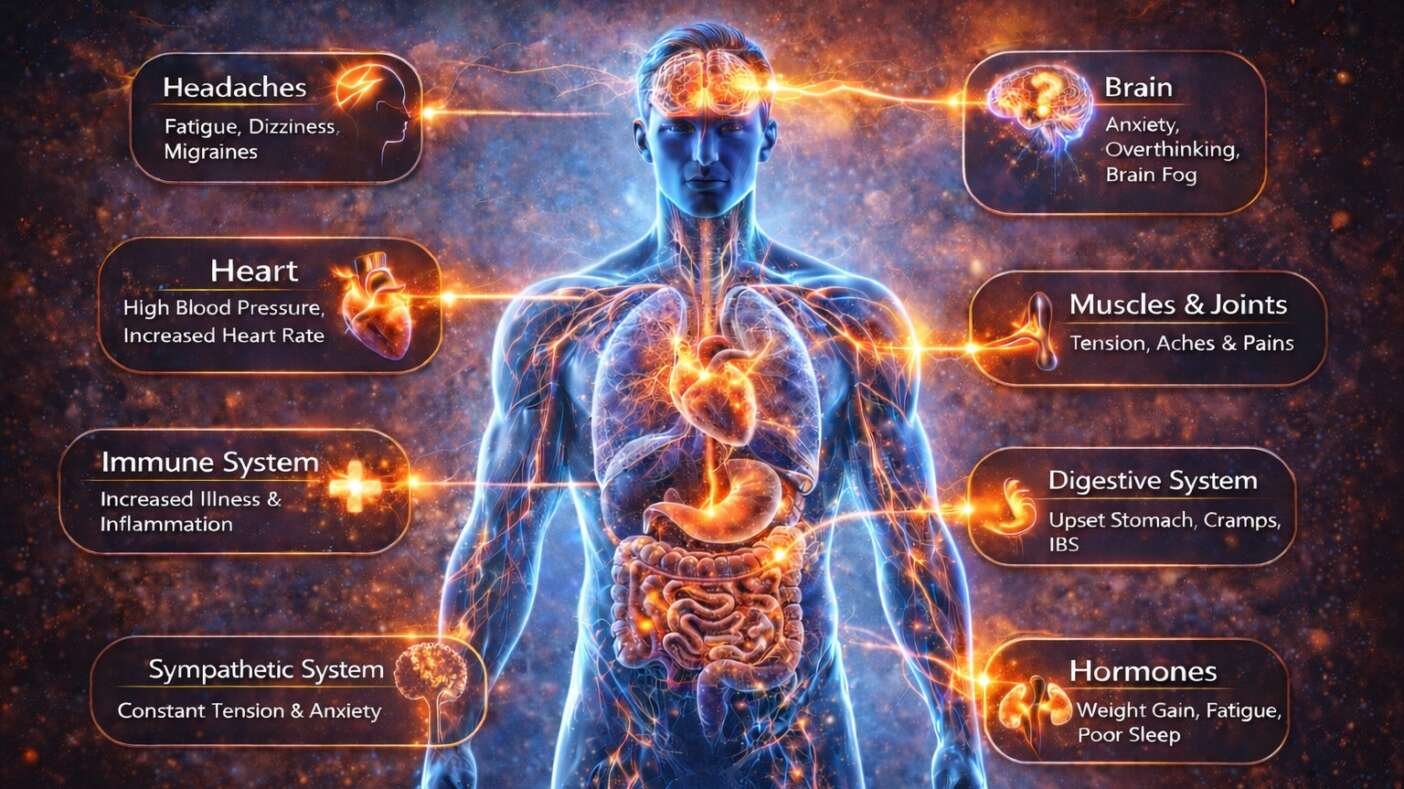
The Cost of Not Dealing With Stress and Anxiety
Stress and anxiety are often minimized. People tell themselves it’s temporary, manageable, or “just how life is right now.” But stress and anxiety don’t slow down on their own. They accumulate — quietly and progressively — until the cost shows up in health, energy, relationships, and missed life.
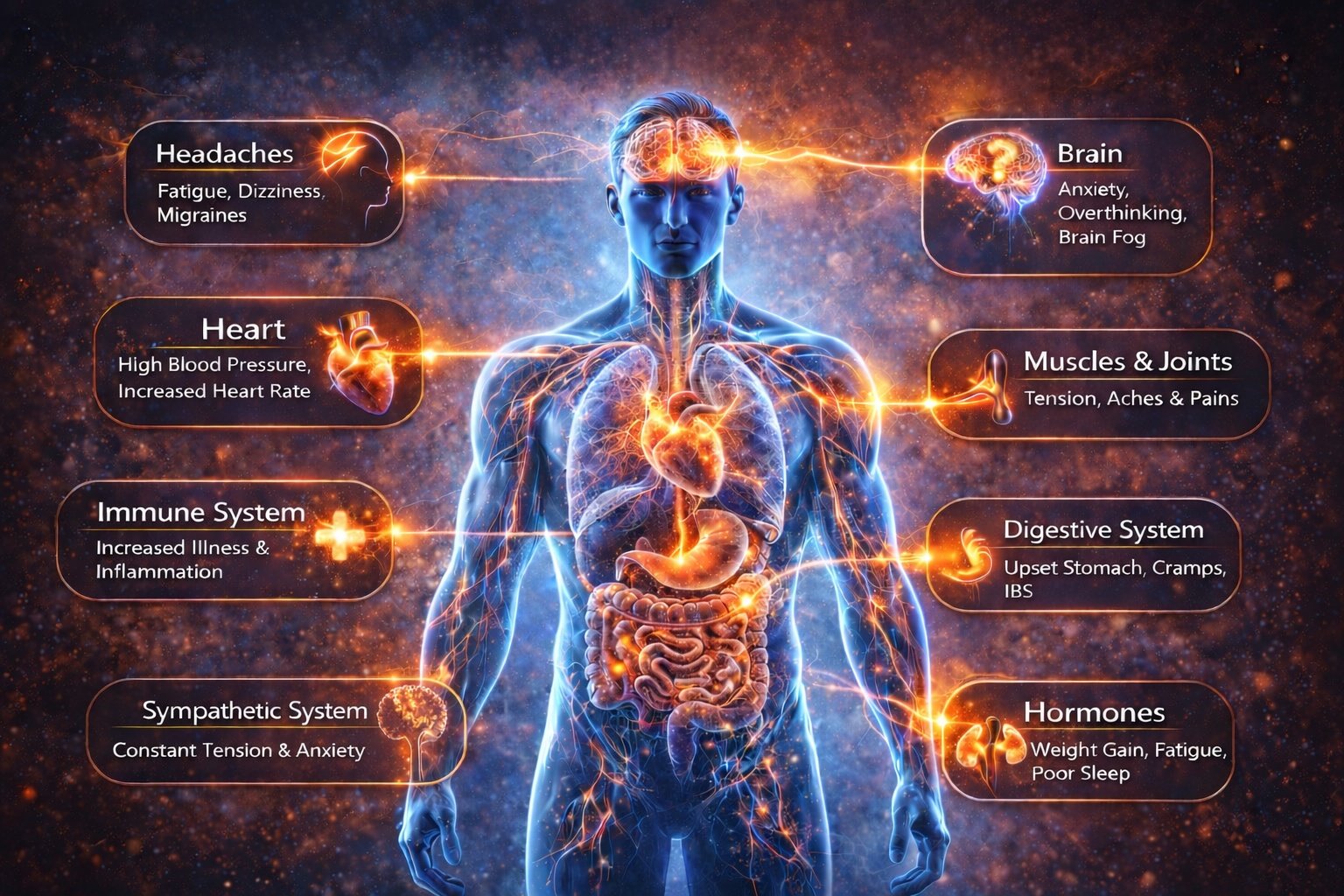
People often wait because stress feels survivable — until it isn’t. The cost is rarely immediate. It’s cumulative, and it shows up later as fatigue, tension, irritability, and a nervous system that can’t fully reset.
Stress and Anxiety Are Not Just Mental States
Stress and anxiety are driven by the nervous system, not just thoughts. When the body perceives ongoing threat — deadlines, pressure, unresolved emotion, uncertainty — it activates the sympathetic nervous system (fight or flight).
This system is designed for short-term survival, not long-term living. When it stays active for months or years, it begins to affect nearly every system in the body — often without the person realizing the connection.
The Physical Cost of Chronic Stress and Anxiety
The Nervous System
- Constant tension and hypervigilance
- Difficulty relaxing, even during rest
- Overreaction to small stressors
- Feeling “on edge” or emotionally drained
Over time, calm begins to feel unfamiliar — not because you forgot how to relax, but because the system learned to stay braced.
The Brain
Chronic stress and anxiety change how the brain functions:
- Increased rumination and overthinking
- Difficulty focusing or making decisions
- Memory and concentration issues
- Reduced emotional regulation
The brain becomes wired for threat detection instead of clarity.
Hormones and Stress Chemistry
Prolonged stress elevates cortisol and adrenaline, contributing to:
- Fatigue and burnout
- Sleep disruption
- Weight gain or loss
- Blood sugar imbalance
The body never fully resets — it stays braced.
The Immune and Inflammatory Systems
- Frequent illness
- Slower healing
- Inflammatory flare-ups
The body cannot repair itself while it believes it is under constant threat.
The Cardiovascular System
- Elevated blood pressure
- Increased heart rate
- Greater strain on the heart and blood vessels
Even when symptoms feel “mental,” the body is responding.
IBS and the Gut–Brain Connection
One of the clearest medical examples of stress affecting the body is Irritable Bowel Syndrome (IBS). IBS is now widely recognized as a disorder of gut–brain interaction — not simply a digestive issue.
How Stress and Anxiety Drive IBS
- Altered gut motility (diarrhea or constipation)
- Increased sensitivity and pain perception
- Disrupted communication between the brain and gut
- Microbiome imbalance
- Increased inflammation
Many people notice IBS symptoms flare during stress — even when diet hasn’t changed. This is not imagined. It is neurological.
The Emotional Cost: Missing Your Own Life
Beyond the physical toll, stress and anxiety quietly steal life.
- Being present with family and friends
- Enjoying success you worked hard for
- Feeling calm during moments that should feel good
- Taking opportunities due to fear or self-doubt
Life becomes smaller — not because of circumstances, but because the nervous system is constantly bracing.
The Hidden Cost: Identity Erosion
One of the most overlooked consequences of chronic stress and anxiety is identity drift. People slowly begin to see themselves as anxious, overwhelmed, tired, or “just stressed.” This identity reinforces the pattern. Stress stops being something you experience — and starts becoming who you believe you are.
Coping strategies can reduce symptoms — but they often don’t change the pattern. You can’t out-think a survival response. When the nervous system is dysregulated, the body keeps reacting automatically.
Why Willpower and Coping Alone Rarely Work
Most stress solutions focus on managing symptoms, distracting the mind, forcing relaxation, or “thinking positive.” These strategies can help temporarily — but they don’t change the automatic nervous system patterns driving stress and anxiety. You cannot think your way out of a biological survival response.
How Hypnosis Helps With Stress and Anxiety
Hypnosis works because it communicates directly with the systems that create stress — not just the symptoms. Clinical research shows hypnosis can support:
- Reduced stress and anxiety levels
- Improved emotional regulation
- Lower nervous system hyperactivation
- Increased parasympathetic (“rest and regulate”) activity
Stress and anxiety are learned patterns. And anything learned by the brain can be rewired. Hypnosis leverages neuroplasticity by calming the nervous system, reducing resistance, and updating subconscious stress responses. Many people notice less overthinking, faster emotional recovery, and a sense of calm returning naturally.
The Montague Method Approach
At Montague Hypnosis, stress and anxiety are not treated as problems to suppress — but as signals from a system that needs recalibration.
The Montague Method integrates:
- Hypnosis for subconscious access
- Nervous system regulation
- Identity-based change
- Emotional regulation
- NLP and positive coaching principles
- Reinforcement through the 9 Golden Rules
Hypnosis and Medical Care
Hypnosis does not replace medical diagnosis or treatment. It works best alongside appropriate medical care, supporting regulation and helping reduce the stress load carried by the body.
Many stress-sensitive conditions are amplified by nervous system dysregulation. When the system learns safety again, the body often becomes more responsive to treatment, recovery routines, and lifestyle changes.
This is especially true in gut–brain conditions like IBS, where symptoms are strongly influenced by stress signaling. The goal isn’t “relaxation.” The goal is a stable, regulated baseline.
Final Thought
The greatest cost of not dealing with stress and anxiety isn’t just discomfort. It’s years spent tense, health slowly strained, joy postponed, energy drained, and life experienced through survival mode.
You don’t have to live in survival mode. When the nervous system changes, everything changes. If stress and anxiety have been quietly running your life, a consultation is not a commitment — it’s clarity.